Disasters, fire, and weather
Fires, injuries, bomb threats and bad weather can cost you staff, mail and money. Nothing on this page calls for help by itself. You call every emergency service yourself with the SOS button, so learn what each emergency needs.
When Enable Disasters is on, Sandbox Standard and free play can roll rare bomb threats, electrical fires on worn gear, carrier truck accidents on motorized routes, dog bites on foot routes, contraband in mail, and extreme weather (Heat Wave, Cold Snap, Storm). The Sandbox Training Post preset starts with Enable Disasters off. Campaign missions suppress those random rolls. Under Fire scripts threat and fire drills instead. See Story and Sandbox.
Fire
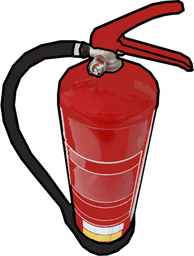
Fires start from electrical faults, ignored bomb threats, or mail bombs. A circuit near capacity, about 90 percent, can build heat and catch fire, so keep your circuits well below that load. After such a fire the breaker stays off until the blaze is out and the load is under 75 percent.
Burning tiles spread while the blaze is intense. Fire damages gear, drops ash and stresses staff, and a large one hurts satisfaction.
Kinds of fire
Fires differ by what burns.
- An electrical fire on bare floor is a smolder: small flames, a lot of smoke and sparks, slow to spread. It trips the circuit it starts on.
- Fire that reaches a tile holding mail becomes a mail fire: tall bright flames that spread fast and burn the mail. Each burned piece is an insurance claim and costs its town service points, and more than half of the burned pieces are destroyed.
- A blast from a device is very hot for a few seconds, then settles into one of the other two.
Fire also wears mail containers, the X-ray and the postage kiosk. A smolder that reaches your mail turns into the fast kind, so deal with any fire near mail first.
When a fire starts
Staff run clear of a fire and stay clear until it is out. Nobody walks through flames. A big fire, four or more burning tiles, or any blast empties the building: staff and customers go outside and wait until it is out, and nobody is marked late for it.
Staff with the Brave trait stay. They grab a Fire Extinguisher and fight it, and a brave janitor fights it bare-handed when none is free.
Nobody calls the fire department for you. Press SOS (bottom right, next to OT) and choose Fire Department. The truck drives in on the road, the crew runs in with hoses, and more trucks follow on their own if the fire spreads. Prolonged exposure can injure or kill staff, so make the call early.
Injuries and the ambulance
A worker hurt by fire or a blast stops work and waits with an Injured mark, and the SOS button flashes. Press SOS and choose Ambulance. Two paramedics walk the worker to the ambulance and they leave together. The worker is then off work for 3 days after burns, or 5 days after a blast.
If nobody calls, the worker goes home alone after about 3 game hours and is off 2 days longer. Base pay continues during the leave. Overtime does not pay them and cannot call them in. The Staff tab shows when they are back.
Only call it when someone is hurt. An ambulance called with nobody hurt is a false alarm and is fined.
Injury insurance pays 2.5 times daily wage, at least $150.00. A fatality pays 10 times daily wage, at least $800.00. Payouts show in the event log and on the day summary.
A death costs more than the insurance payout. The town newspaper prints it, a vested pension goes to the family, and the union log records it. Labor relations and staff satisfaction drop, Government standing drops, and everyone on the floor takes a morale and stress hit. Brave staff take it half as hard.
Local stations are safer
A local station is much safer than a Distribution Center. The line is whether the X-ray can be built. That opens once your facility is a Distribution Center, with a High-Volume Sorter and a Distribution Floor. In the campaign it is also open in every mission after Scale Up, starting with First Christmas.
Below that line, inbound trucks bring no explosives. A hidden explosive that still reaches a clerk, from a counter drop-off, does not go off. The clerk sets the suspicious package aside in the hold tub and a find goes on file for the Mail Inspector.
A bomb threat is real 15 percent of the time instead of 45, and an ignored real one burns one tile instead of five. Fire spreads more slowly and an electrical fault starts cooler. It takes 9 seconds in the flames to die instead of 5.5. Deaths are still possible at a station, but rare.
Other disaster alerts
The SOS button calls the fire department, the bomb squad, the Mail Inspector and an ambulance. Nothing is called automatically. The button flashes red while a fire burns, a building is being evacuated, a worker is hurt, or a find is on file for the Mail Inspector and nobody is responding. When it flashes, something is waiting for your call.
The SOS window reads "Free for a real emergency. A false alarm is fined $1,500.00." A false alarm still brings them out.
A find goes on file for the Mail Inspector when explosives or weapons are seized, when a clerk sets a suspicious package aside, when missed drugs, weapons, or undeclared currency turn up on the street, after a mail bomb, and when a bomb threat is evacuated. A clerk stealing cash out of the mail is also a real case, even though nothing tells you. Missed hazmat hurts satisfaction and mail quality. See Security.
Carrier alerts
Both of these alerts need Enable Disasters.
- A carrier driving off the map can crash. Recall brings them back early. Push Through waits longer. Ignoring the alert chooses Push Through.
- A carrier on foot, or in a personal car, can be bitten. Treat and Return is the early option. Finish Route is the long one. Ignoring that alert chooses Finish Route.
Weather
Weather follows the season, and it reaches inside your building too. It shows on the clock strip and on Operations: Status. Rain and storms slow outdoor walking and trucks.
Indoor temperature drifts toward the outdoor weather. Comfort is 18 to 24 C, shown in your temperature unit. Too hot raises fatigue and stress. Too cold raises fatigue. A heat wave taxes everyone even with air conditioning.
Each Window AC Unit serves 15 floor tiles and each Space Heater serves 12. A Vent on a working HVAC Central Unit serves up to 20. Box fans give a local comfort radius when rooms run hot. Count your floor tiles and place enough units to cover them. Weather operations days also raise the electricity bill. See Heating and cooling.
Tiles without a roof pick up mud from rain or storms and snow from cold. Mud and snow slow walking, and roofed floors stay clear, so put a roof over the paths your staff walk most. Salt, sand, and a wash are not live services. The Winter Service Shed can be placed, and that roadside treatment is coming later. See Build menu.
Bare dirt slowly grows into grass when it is not covered. Sparse trees grow on open grass. They are decorative. Paint floors or roads to clear them.
Staff get dirtier from muddy or snowy ground and from heat. A full clean happens only when they go home.